

The Retro Influences Behind Enter the Garden and Shinsei Galverse Posted Nov 24, 2026
Article ListSponsored Post
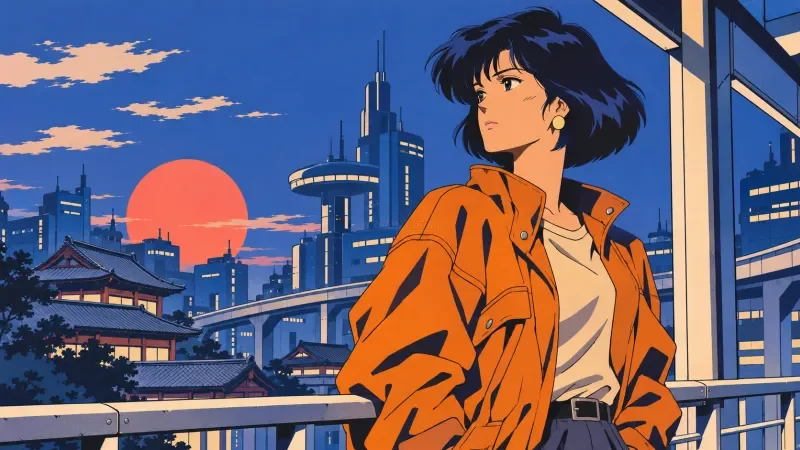
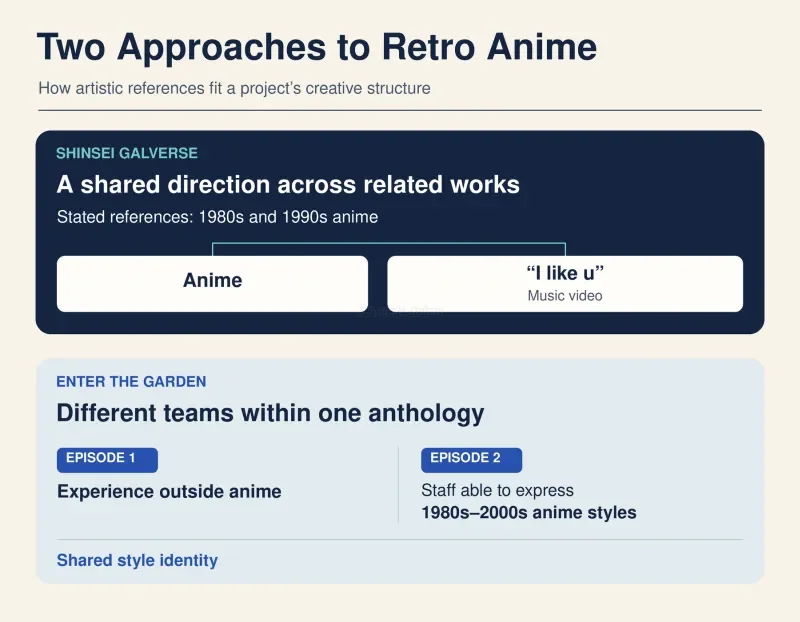
Shinsei Galverse and Enter the Garden both draw on earlier anime, with their creators describing different approaches to those influences. Galverse names a period of anime history as an artistic reference. Enter the Garden gives different episode teams room to interpret a shared identity. Looking at those choices makes “retro” more specific: it can describe a source of ideas, a direction for a project, or the strengths sought in its artists.
In its May 2025 introduction to Shinsei Galverse’s anime project, Otaku USA reported its digital collectible connection and its stated inspiration from 1980s and 1990s anime. The project described an ambition to reinterpret those influences with contemporary values. Director Ayaka Ohira’s work therefore has a declared historical reference, together with an intention to develop something new from it.
Galverse’s References Extend Beyond the Anime
Galverse’s approach to Web3 spans anime culture and brings it into the wider subject of digital asset stories covered by AlphaWire. More and more, as the online space diversifies and expands, creators are getting interested in what it means to own artwork and how it can be distributed. Galverse forms part of the Web3/NFT project that has been labeled "indie anime, made in Tokyo, for Gals by Gals." That alone indicates some of the project's intentions, signaling independence, connection with audiences, and proud Japanese and feminine roots. As the crypto and Web3 space continues to grow, we're likely to see more projects taking shape using this kind of technology.
Galverse's collectible connection explains one part of that background; the earlier anime references describe its intended artistic direction. Keeping those details distinct makes room to discuss what the creators actually chose to revisit. In Galverse’s description, the older influences also connect the anime with another work belonging to the project.
Otaku USA describes Tove Lo’s music video for “I like u” as part of Galverse and, citing the project’s website, presents it as a standalone introduction to its nostalgic futurism. That description assigns the video two functions: it exists as a work in its own right and introduces an aesthetic associated with the anime project. The stated connection concerns an artistic identity that extends across releases, rather than a requirement to tell every story in the same format. The question of artistic identity is one constantly explored by web3 projects, and Galverse fits into that conversation.
Nostalgic futurism brings together a reference to the past and an imagined future. Within Galverse’s stated direction, those elements can coexist. Returning to older anime does not require treating its setting, themes, and values as an inseparable package. The intention to reinterpret earlier ideas leaves room to choose among them. The historical period identifies where the project is looking; its contemporary ambitions leave open what it wants to do with that material.
Enter the Garden Chooses Its Teams
Enter the Garden approaches variety through an anthology of separate stories. In an interview about the production’s creative choices, creative producer Goro Taniguchi explained that he selected staff with different backgrounds for different episodes. For the first, he assigned people who had worked outside anime. For the second, he chose staff capable of expressing anime styles from the 1980s through the 2000s. The historical reference helped inform who would make the episode.
The interview’s discussion of visual identity also encompasses American streetwear and traditional Japanese elements. Taniguchi described working from Azuki’s ideas and existing fan art, selecting parts that staff understood or found appealing. This gives the project a more particular starting point than a decade alone. Earlier anime sits among several sources of imagery, with the team choosing how to arrange the material for individual episodes.
The episodes also began with different character material. Taniguchi said the first used Azuki’s world setting with characters developed under his team’s direction, while the second featured existing Azuki characters. He also directed how those existing characters came to life onscreen, connecting the established designs with choices made specifically for the second episode’s animation. A shared world therefore did not require identical starting conditions for every installment. This distinction helps explain the room available for interpretation: the teams were contributing to one project while working with different combinations of established and newly developed material.
That freedom had boundaries. Taniguchi described an agreed stylistic identity with space for subtle influences, and said he avoided prescribing additional cultural references that could restrict staff creativity. Discussing his work with Tatsuyuki Tanaka, he explained that responsibilities were established at the beginning. Within those responsibilities, he allowed room to work. The arrangement places a limit on his own intervention as well as defining the contributors’ roles.
Artistic References and Production Methods
These accounts describe choices about influences, personnel, and responsibility. They do not make a decade into a complete account of production. Galverse’s stated reference to older anime identifies an artistic direction. Taniguchi’s staffing decisions identify the experience he wanted available to an episode. Neither statement alone specifies the methods used to create every image, and the two kinds of information serve different purposes in understanding the work.
Taniguchi addressed that distinction directly by placing expressive intention ahead of technique. His explanation treats a method as something chosen to communicate an idea. The historical reference and the production method can therefore be discussed separately: one concerns the material an artist draws upon, while the other concerns how the work is realized. An account of influences becomes clearer when it preserves that difference instead of attaching technical assumptions to the word retro.
Galverse describes continuity across related releases; Enter the Garden describes variation among episode teams. The shared point is the room between choosing a reference and deciding how to interpret it. In these projects, earlier anime supplies a direction that creators develop through other influences, particular collaborators, and defined responsibilities. The resulting artistic identity is something they organize across works and episodes, rather than something a historical label establishes on its own.
As Japan's first breakout Web3 success, Galverse opens some fascinating questions that following anime creators are likely to be exploring, continuing the chain of influence and inspiration that the Galverse creators themselves drew on when making the series.
Comments are powered by Disqus, which loads external scripts and sets cookies.