

Why Anime Is Turning Vertical for Phones Posted Sep 2, 2026
Article ListContributed Post
Anime moved across cinema screens, television sets and laptops without abandoning the horizontal frame. The smartphone presents a harder production question. A 16:9 episode can be reduced for mobile viewing, but black bars waste space and aggressive cropping can remove a character, subtitle or visual joke.
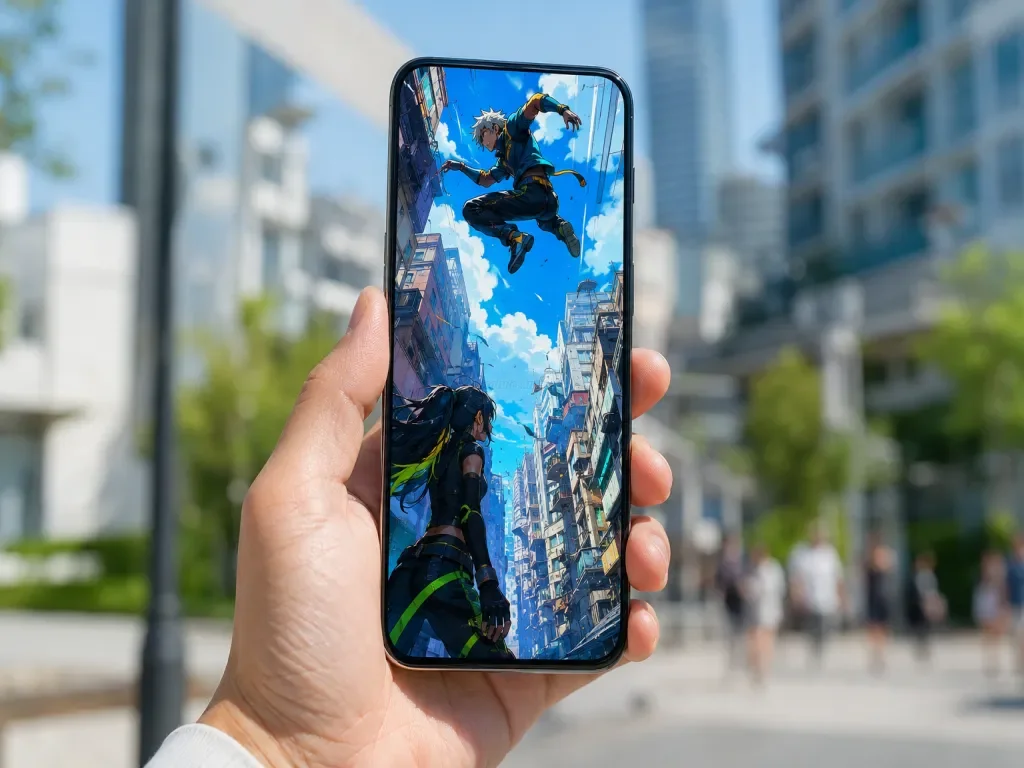
Some creators now treat the phone as the original screen. Their series are storyboarded in 9:16, with action, dialogue and text arranged for portrait viewing. This is not conventional anime squeezed into a social-media clip. It is a different approach to composition.
Ryuu Is Building for One Screen
In May 2026, Ryuu announced a streaming service dedicated to vertical animation. The company develops, funds and publishes series made natively in 9:16 rather than cropping horizontal work. Ten original shows were listed as being in production, with episodes planned as daily mobile releases.
Ryuu’s roster includes internet-born artists such as Tezeze, Shar, Prins and Alindraws. Their work has accumulated more than one billion online views. That audience matters because independent animators often establish characters through short clips before a studio offers a series deal.
The service also promotes a “0% AI” production policy. It places human authorship at the centre of its pitch while generative tools remain contentious across animation.
Portrait Framing Changes the Drawing
A vertical frame creates more space above and below a character, but less room at the sides. Directors cannot apply a television storyboard and expect every shot to survive.
Portrait production encourages several choices:
- close-ups with faces positioned near the centre;
- stacked characters instead of wide group arrangements;
- vertical movement such as falls, jumps and transformations;
- backgrounds that lead the eye up or down the screen.
Dialogue may become easier because a standing character fits naturally into the frame. Battles are more complicated. A sword fight involving opponents at opposite edges has little horizontal room, while a landscape can lose its scale.
The Interface Must Preserve the Action
Mobile casino games face a related layout problem. At an online casino, a portrait pokies interface must reposition the reels, stake selector, spin control and paytable without altering the game’s odds or wager value. If the screen rotates or the layout reloads, the client may pause a new bet until the completed spin and current balance are restored, preventing a display change from creating a duplicate action.
Vertical anime has no wager to protect, but it has comparable continuity concerns. A subtitle, reaction or important object cannot disappear when controls occupy part of the phone screen. Composition must account for the viewing interface, not just the video file.
Horizontal and Vertical Scenes Behave Differently
The differences become clear when the same storytelling task is planned for each format.
| Scene | Horizontal 16:9 | Vertical 9:16 |
|---|---|---|
| Two-person dialogue | Characters share the frame | Faces are stacked or alternated |
| Chase | Sideways distance shows speed | Depth and upward movement dominate |
| Group shot | Figures fit naturally | Rows or close framing work better |
| Establishing view | Landscape supplies scale | Architecture emphasizes height |
Neither format is automatically superior. Horizontal framing suits panoramas and movement across a wide environment. Portrait framing gains intimacy and fills the screen used for short videos, messaging and webcomics.
Short Episodes Alter the Rhythm
Ryuu plans to distribute bite-sized vertical episodes through daily drops rather than a weekly television slot. The schedule favours compact scenes that reach a clear turn before each instalment ends.
The format has roots outside anime. Vertical microdramas expanded through apps such as ReelShort and DramaBox, training audiences to follow stories in brief instalments. Animation can use the structure without copying the exaggerated plotting common to live-action microdramas.
Short episodes do not require simpler worlds. They distribute information differently. A setting may emerge through recurring visual details, while character development accumulates across dozens of small encounters.

A New Format, Not a Replacement
Vertical anime is unlikely to displace theatrical films or television series. Productions built around landscapes, ensemble battles or cinematic spectacle still benefit from a wide frame. The likelier future is an additional category for independent stories designed around phone viewing.
Ryuu’s launch will test whether audiences want a subscription service for that category. Its significance is already visible: artists no longer treat portrait video only as advertising for a “real” horizontal project. The phone itself can define how an animated story is staged, paced and released.
Comments are powered by Disqus, which loads external scripts and sets cookies.